Bricklayer Jobs in Poland: Salary, Vacancies and Working Conditions
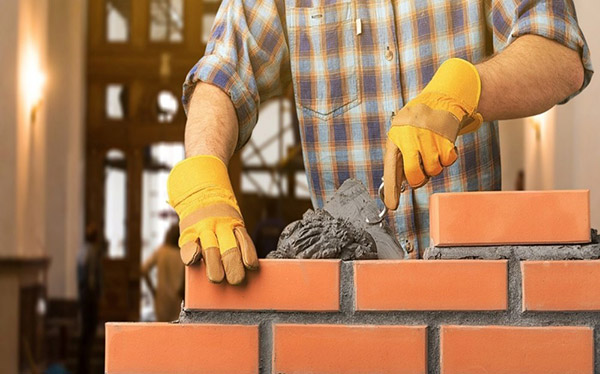
Bricklayer jobs in Poland remain one of the most in-demand construction occupations for foreign workers. Demand for bricklayers stays consistently high, as residential complexes, private houses and commercial buildings are under construction in Warsaw, Lodz, Wroclaw, Gdansk, Katowice and Opole. This article brings together up-to-date information on pay rates, accommodation conditions, experience and language requirements, and the masonry materials a bricklayer most commonly works with on Polish construction sites.
How Much Does a Bricklayer Earn in Poland
A bricklayer’s salary in Poland depends on the payment format, the city and the worker’s qualification. Three main formats appear on the market:
- Hourly net rate — typically 30-40 zł/hour, rising to 33-50 zł/hour for students and experienced workers.
- Piecework pay (akord) — 30-50 zł per m² of completed masonry, which favours experienced craftsmen with high output.
- Monthly income at full employment — on average 6,000-12,000 zł, depending on the number of hours and the payment format.
Payments are usually made twice a month, and many employers offer an advance within the first week of work. This matters most for those planning relocation who want to understand the financial side in advance — a related overview of how Easy Jobs in Europe are structured can help with planning ahead.
Where to Look: Job Locations Across Poland
Most vacancies are concentrated in major agglomerations. Warsaw and its surrounding area (Mszczonów, Minsk Mazowiecki) lead in the number of openings, followed by Lodz, Wroclaw, Gdansk, Katowice and Opole. Local pay rates, working hours and accommodation packages can vary noticeably between cities, so it is worth comparing several locations before applying.
Is Polish Language Required
Most bricklayer vacancies are marked as available “without language” (bez znajomości języka). In practice this means that basic everyday understanding is enough to communicate with a site foreman — fluent Polish is not required. However, employers who specify “Polish at an understanding level” usually mean the ability to follow simple work instructions and safety briefings.
Experience and Qualification
Experience requirements vary: some vacancies are open to candidates with at least one year of experience, while others require 2-3 years for more complex, higher-paid projects. A separate category is bricklayer’s assistant, suitable for those just starting a construction career and willing to learn on site.
The core qualification is the ability to work with different materials: silicate blocks (Silka), ceramic blocks, aerated concrete, clinker brick, Porotherm, as well as classic brick and refractory brick. The wider the range of masonry techniques a specialist knows, the higher the rate and the easier it is to find a suitable vacancy.
Housing: Free or Paid
Accommodation is one of the most important factors when choosing a vacancy. Conditions vary significantly: some employers provide free housing close to the construction site, others charge a symbolic fee (from 20 zł/day to 200-360 zł/month), and some vacancies do not include housing at all. It is worth clarifying this point separately before applying, since it often determines the real value of an offer.
Documents and Legal Employment
Legal employment as a bricklayer in Poland usually requires one of the following formats: a work contract (umowa o pracę) or a mandate contract (umowa zlecenia), arranged through a licensed employment agency or directly with the employer. Depending on the country of origin, a biometric passport, a work visa or a residence card (karta pobytu) may be needed — some employers assist with obtaining it.
It is important to choose vacancies marked as “direct employer”, “no intermediaries” or “licensed agency”, as this reduces the risk of hidden employment fees.
Working Hours and Conditions
The standard schedule is 8-12 hours a day, most often Monday to Friday, with Saturdays included as a working day for some vacancies. Monthly working hours typically range from 200 to 290 depending on the project workload. Employers also indicate whether tools, work clothing, medical examinations and occupational safety (BHP) are provided — these points are worth confirming when applying, as they directly affect the worker’s overall costs.
Working as a Team or Individually
A separate market segment covers vacancies for teams of 3-5 workers. This format suits experienced bricklayers who already work as a crew and want to take on an entire project rather than apply individually. Team-based work is often linked to piecework pay per m² and provides more predictable income with a steady workload.
How to Choose a Reliable Vacancy
- Check whether the vacancy names a direct employer or a licensed employment agency.
- Clarify the payment format: hourly, piecework (per m²) or combined.
- Ask about housing: free, paid, near the site or not provided.
- Find out about transport to the site: company transport or your own.
- Confirm whether tools and work clothing are included in the package.
- Make sure the vacancy does not require any payment for employment.
Frequently Asked Questions
How much does a bricklayer earn per hour in Poland?
On average 30-40 zł/hour net, while experienced specialists can reach 45-50 zł/hour or 50 zł/m² under piecework pay.
Can you get a bricklayer job without experience?
Some vacancies are open to candidates without experience for the assistant bricklayer position, but most higher-paying offers require 1-3 years of experience.
Is housing provided?
It depends on the employer: free housing near the site, paid housing (from 20 zł/day), and vacancies without housing all appear on the market.
Do you need to know Polish?
In most cases, basic understanding of Polish is enough to communicate with a foreman; full fluency is not a mandatory requirement.
For those considering construction work as one option among several, it is useful to review a broader overview of how Work in Europe is organised, in order to compare conditions across different industries and countries.
Comments 0
All comments are published after review.
No comments yet. Be the first!