22 Professions That Were Popular 100 Years Ago
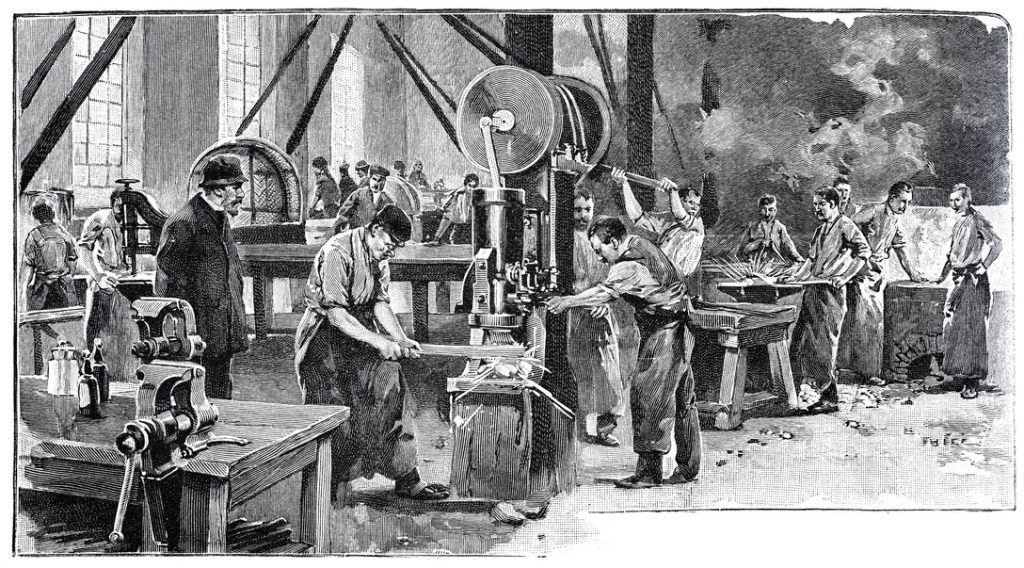
A hundred years ago, the world looked completely different. There was no running water in every home, elevators did not move by themselves, and to call someone, you needed a real person acting as an intermediary at a telephone exchange. City life depended on hundreds of professions that sound exotic today. Some disappeared because of electricity, others were pushed out by computers, and still others simply dissolved in progress.
Here are 22 professions without which the beginning of the 20th century would have been unthinkable — and why they no longer exist.
1. Water Carrier
What they did: Delivered drinking water to homes in a horse-drawn cart with a barrel. In cities without centralized water supply, this was a daily necessity.
Everyday detail: The color of the barrel mattered: yellow meant drinking water, green meant water for technical needs. A dog running beside the cart served as a living signal that the water carrier had arrived, and residents came out with buckets.
What killed the profession: Urban plumbing. As soon as water began flowing from taps, the need for water carriers disappeared within just a few years.
Modern equivalent: Bottled water delivery to offices and homes — a distant heir to the same idea.
2. Lamplighter
What they did: Walked through city streets every evening and lit gas or oil lamps on posts, then put them out in the morning. Each lamplighter had a route they knew by heart.
Everyday detail: A lamplighter carried a long pole with a flame and a small ladder. In fog or rain, the work became especially difficult: the lamps went out, and the route had to be repeated.
What killed the profession: Electric lighting. When streets switched to electric lamps with centralized control, an entire profession disappeared within a decade.
Modern equivalent: Automated city lighting systems controlled by a single dispatcher.
3. Cabman
What they did: Transported passengers around the city in horse-drawn carriages. This was the urban transport of the early 20th century — the taxi of its time. Cabmen were divided into freight drivers and passenger drivers.
Everyday detail: Cabmen had unofficial fares: “from Tverskaya to Arbat — five kopecks.” Bargaining was normal. A good cabman knew every courtyard and hidden passage in the city.
What killed the profession: The automobile. In 1900 there were almost no cars on the streets, but by the 1930s the horse had been replaced by the gasoline engine.
Modern equivalent: Taxis and Uber — the same idea, only without the horse.
4. Telephone Operator
What they did: Sat at a telephone exchange and manually connected subscribers through a switchboard, moving plugs and wires so two people could speak. Without her, a call was physically impossible.
Everyday detail: The profession was considered female because women were thought to be more patient and polite with irritated callers. A working day lasted 8–10 hours with no chance to leave the panel.
What killed the profession: Automatic telephone exchanges. Auto-dialing technology made manual switchboards unnecessary.
Modern equivalent: Voice assistants and bots that now pick up the phone instead of an operator.
5. Typist
What they did: Typed documents, letters, and manuscripts on a typewriter. Every office employed several typists; without them, paperwork was unthinkable.
Everyday detail: Typing speed was measured in characters per minute and was a professional skill. A typo could not be simply deleted: it had to be covered with white correction fluid or the whole sheet had to be retyped.
What killed the profession: The personal computer. With Word and printers, everyone became their own typist.
Modern equivalent: Typing is now a universal skill, not a separate profession.
6. Chimney Sweep
What they did: Cleaned soot from chimneys so stoves and fireplaces would draw properly and not cause fires. They climbed into narrow chimneys or worked from above, lowering a brush on a cable.
Everyday detail: Chimney sweeps wore black clothes because any other color quickly became useless. Meeting a chimney sweep on the street was considered a good sign, and this superstition still survives in Europe.
What killed the profession: Central heating and gas boilers. When stoves disappeared from homes, chimneys became rare.
Modern equivalent: The profession partially survives in houses with fireplaces and old stoves, but there are far fewer chimney sweeps now.
7. Ice Cutter
What they did: In winter, cut large blocks of ice from rivers and lakes, then transported them to icehouses — special storage rooms where the ice kept food cold throughout the summer.
Everyday detail: Ice was cut with special hand saws into regular blocks. The work took place in freezing weather, on rivers, with a constant risk of falling through the ice.
What killed the profession: The electric refrigerator. Once refrigerators appeared in homes, the need for natural ice disappeared.
Modern equivalent: Ice factories for restaurants and bars, though this is now an industrial process.
8. Elevator Operator
What they did: Operated elevators manually: opened and closed lattice doors, moved control levers, and stopped the cabin exactly at floor level. It required skill.
Everyday detail: Elevator operators often wore uniforms and were considered part of the “face” of a respectable building — a hotel, bank, or department store. In some American buildings, elevator operators worked around the clock in shifts.
What killed the profession: Automatic elevators with push-button controls. The technology spread in the 1950s and made a live operator unnecessary.
Modern equivalent: Elevator buttons. In rare luxury hotels, elevator operators still exist as an element of service rather than a necessity.
9. Factory Reader
What they did: Sat on a raised platform in the middle of a workshop and read newspapers, books, and news aloud to workers while they performed monotonous manual work: rolling cigars, sorting goods, or sewing.
Everyday detail: Factory readers were hired by the workers themselves, who collected money from their wages. The repertoire was chosen by vote. Serialized novels and political newspapers were especially popular.
What killed the profession: Radio. When radios appeared in workshops, a live reader became too expensive a pleasure.
Modern equivalent: Podcasts and audiobooks — the same idea, but in headphones.
10. Silent Film Pianist
What they did: Played the piano in movie theaters, accompanying silent films with live music. The pianist chose melodies according to the mood of the scene — chase, romance, tragedy — and often improvised during the screening.
Everyday detail: A good silent film pianist could be a real star of the local cinema. Some kept notebooks with musical themes for different genres and situations.
What killed the profession: Sound film. In 1927, The Jazz Singer, the first feature film with synchronized sound, was released, and by the 1930s the profession had almost completely disappeared.
Modern equivalent: Film soundtracks and sound designers — heirs to the same function.
11. Skomorokh
What they did: Performed at fairs, town squares, and folk festivals: singing, dancing, doing acrobatics, and acting out comic scenes. They were folk artists and showmen of their time.
Everyday detail: Skomorokhi traveled in troupes from town to town. They often carried oral folklore — songs, comic verses, and tales.
What killed the profession: Theater, cinema, and later television. Organized forms of entertainment replaced street performance.
Modern equivalent: Stand-up comedians, street musicians, and YouTubers perform a similar social function.
12. Pinsetter
What they did: Stood at the end of a bowling lane and manually set up knocked-down pins and returned the ball to the player. The workers were mostly teenage boys.
Everyday detail: The job was noisy and dangerous because balls flew at high speed. One had to be quick enough to move one’s feet before the next throw. The workday lasted until late at night, as long as the hall was open.
What killed the profession: The mechanical pinsetter, invented in 1936 and put into production in the 1950s.
Modern equivalent: The automatic machine in any bowling alley.
13. Town Crier
What they did: Walked through the streets with a bell and a loud voice, reading important announcements about fairs, decrees, searches, and the deaths of notable people. This was a living news channel.
Everyday detail: A town crier had a special intonation — a drawn-out cry of “Hear ye!” — which residents recognized from afar and came outside to hear.
What killed the profession: Newspapers and later radio. When information could be read or heard at home, the need for a live town crier disappeared.
Modern equivalent: Push notifications on a smartphone — the same function, only in your pocket.
14. Stenographer
What they did: Recorded speeches, negotiations, and dictation using shorthand — a system of symbols that allowed words to be captured at the speed of live speech. No important meeting could do without stenographers.
Everyday detail: Shorthand schools were in high demand at the beginning of the 20th century. A good stenographer could write down 200–300 syllables per minute, faster than most people speak.
What killed the profession: The voice recorder, and later speech-recognition programs.
Modern equivalent: Automatic audio transcription, such as Google, Whisper, and similar services.
15. Batman, or Officer’s Servant
What they did: Served as a personal attendant to an officer: looked after the horse, cleaned the uniform, prepared food, and handled household errands. Batmen were assigned from among ordinary soldiers.
Everyday detail: Service as a batman was not considered honorable; it was a powerless orderly role attached to an officer. In Russia, the practice was officially abolished after the 1917 revolution.
What killed the profession: Changes in military structure, the abolition of estate privileges, and 20th-century army reforms.
Modern equivalent: Aides-de-camp for senior military officials, but as staff officers rather than servants.
16. Typesetter
What they did: Manually set text for printing, placing individual lead letters into a special frame. One page of a book required several hours of painstaking work.
Everyday detail: The profession required reading text “in a mirror,” because the letters were reversed. An experienced typesetter could set type blindly without looking at the case of letters.
What killed the profession: The Linotype machine and later desktop publishing software in the 1980s.
Modern equivalent: A layout designer in a publishing office.
17. Barge Hauler
What they did: Pulled river vessels upstream with a harness where sail or oars were powerless. It was seasonal work and extremely hard physically.
Everyday detail: Teams of barge haulers moved along the bank in sync, leaning their whole bodies into the harness. Repin’s famous painting Barge Haulers on the Volga was painted in 1873, but the profession still existed in the early 20th century.
What killed the profession: Steamships and tugboats. Machines made human hauling power on rivers unnecessary.
Modern equivalent: River tugboats and push boats — but without people in harnesses.
18. Post Coach Driver
What they did: Drove postal horse teams and transported passengers, mail, and cargo over long distances between cities. They worked at postal stations, changing horses along the way.
Everyday detail: Post coach drivers were colorful figures in fur coats, with their own road songs. They knew every road, ford, and overnight stop for hundreds of versts around.
What killed the profession: The railway and the automobile. By the 1910s, trains made horse transport on long routes economically unprofitable.
Modern equivalent: Long-haul truck drivers and intercity bus drivers.
19. Harness Maker
What they did: Made and repaired harnesses for horses: collars, bridles, saddletrees, and girths. As long as the horse remained the main source of traction, the harness maker was indispensable.
Everyday detail: A good collar was fitted individually to a particular horse, like a shoe to a foot. Bad harness rubbed, reduced pulling power, and could injure the animal.
What killed the profession: The automobile and tractor. Once the horse left the fields and streets, demand for harnesses collapsed.
Modern equivalent: The profession survives in equestrian sport, but on a very small scale.
20. Stoker
What they did: Kept fires burning in steam boilers on ships, in factories, at power plants, and on steam locomotives. They shoveled coal for hours in unbearable heat.
Everyday detail: The average temperature in a boiler room could reach 50–60 degrees Celsius. A stoker could shovel several tons of coal in one shift. The profession was considered one of the hardest and most dangerous.
What killed the profession: The transition to oil, gas, and electricity. Steam boilers faded into history, and so did the stoker.
Modern equivalent: Boiler-room operators, though they monitor automation rather than shovel coal.
21. Milkman
What they did: Delivered fresh milk to homes every morning in cans or bottles. In cities without refrigerators, milk had to be delivered daily, preferably before dawn.
Everyday detail: The milkman knew all customers by name and habit. The clatter of a milk can on the cobblestones was as much a symbol of morning as a rooster’s crow in the countryside.
What killed the profession: The refrigerator and supermarket. Once milk could be stored for weeks in a carton, daily delivery lost its purpose.
Modern equivalent: Grocery delivery services to the door — the same logic, different logistics.
22. Night Watchman
What they did: Guarded warehouses, yards, shops, and whole neighborhoods from thieves and fires, walking a route with a lantern and a rattle to scare off intruders and signal danger.
Everyday detail: In some cities, night watchmen called out the time: “Midnight! All is well!” so residents knew the guard was on duty. This was a living alarm clock for anyone waiting for an early wake-up.
What killed the profession: Street lighting, and later surveillance cameras and alarm systems.
Modern equivalent: Security systems with cameras, motion sensors, and panic buttons.
What Comes Next?
A hundred years ago, people also did not think their professions would disappear. The water carrier could not imagine pipes in every home, the silent film pianist could not imagine films speaking by themselves, and the typist could not imagine being replaced by a box with a screen.
Today, automation and artificial intelligence are already changing the labor market: cashiers, call-center operators, drivers, and some bank employees are under threat. Each of us can ask: is my profession forever? History answers: nothing is forever. Technologies change, and so does the work people do.
Comments 0
All comments are published after review.
No comments yet. Be the first!