Free Food in Warsaw: A Complete Guide to Jadłodzielnie and Food Aid
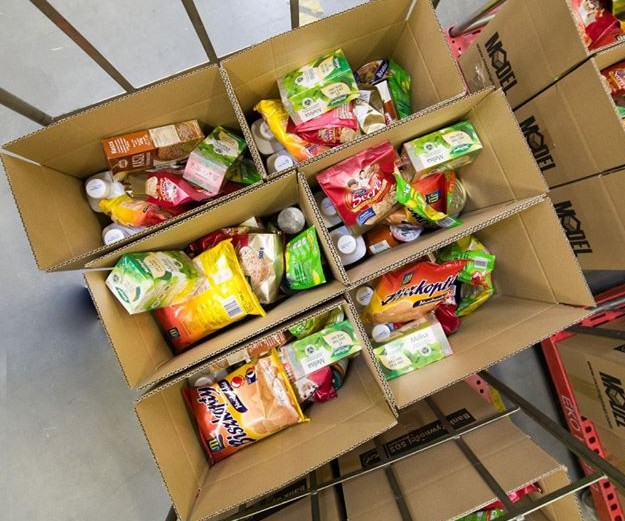
You can get free food in Warsaw in three ways: take groceries from public food-sharing fridges and shelves (jadłodzielnie) without any documents or proof of income; request a humanitarian food parcel or a hot meal through OPS, the Polish Red Cross or Caritas; or use informal options such as shared community meals, neighbourhood gatherings and dedicated social-media groups. Below you will find every current option, with addresses, opening hours and the rules for using them.
What Is a Jadłodzielnia and How Foodsharing Works
A jadłodzielnia (literally, ‘food sharing point’) is an open fridge, cabinet or shelf, indoors or on the street, where anyone can leave surplus food and anyone else can take it for free. The format started in Germany as a way to cut food waste, and similar points now operate in most districts of Warsaw. Anyone can take food there: there is no need to prove income, citizenship, or need. That is what sets jadłodzielnie apart from state or charity aid, which usually requires registration or a referral.
The fridges are stocked by shops, cafes, bakeries and ordinary residents — someone drops off home baking, someone shares leftover groceries before moving out or after an event. Because of that, food is not guaranteed to be there at any given moment: the fridges are restocked irregularly, so shelves can be full one hour and empty the next.
Rules: What You Can Take and Leave
The main ethical rule of foodsharing is to take only as much as you will actually eat, so there is enough left for others. The remaining rules are about safety:
- Homemade food may only be left in clean, tightly sealed packaging labelled with the preparation date and ingredients.
- Store-bought products must have a readable, unexpired best-before or use-by date.
- Raw meat, raw fish, raw eggs and unpasteurised milk should never be left — and for the same safety reasons, it is best not to take such items either.
- Spoiled, rotten or mouldy food should be thrown away, not placed in the fridge.
- If a fridge is dirty or broken, report it to the district office or the city helpline.
List of Jadłodzielnie by Warsaw District
Below is a summary table of public foodsharing points from the official city list, grouped by district. All points are open to everyone, with no paperwork or appointment needed. If you plan to visit a specific location outside busy hours, it is worth confirming its current status via the city helpline 19115, since individual points can temporarily close for repairs or relocate.
| District | Address | Opening hours |
| Bemowo | Bemowskie Centrum Kultury, ul. Rozłogi 18 | Mon–Fri 8:00–20:00; Sat 8:45–15:00 |
| Białołęka | Ryneczek Poraje, ul. Porajów 1 | 24/7 |
| Białołęka | Noclegownia, ul. Kupiecka 15 | 24/7 |
| Bielany | OPS Bielany, ul. Przybyszewskiego 80/82 | 24/7 |
| Bielany | CRS Bielany, ul. Conrada 6 | 24/7 |
| Bielany | ul. Wolumen 3 | 24/7 |
| Mokotów | MCIM, ul. Woronicza 44a | Daily 8:00–20:00 |
| Mokotów | Bazar Lotników, pavilion 136, al. Lotników 1 | Mon–Fri 7:00–19:00; Sat 8:00–14:00 |
| Mokotów | ul. Czarnomorska 11 | 24/7 |
| Mokotów | ul. Barcelońska 1 | 24/7 |
| Mokotów | Pół na Puł, corner of Puławska 20 / Narbutta 2 | Mon 9:00–20:00; Tue–Thu 9:00–21:00; Fri 9:00–23:00; Sat 8:30–23:00; Sun 8:30–20:00 |
| Mokotów | ul. Czerniakowska 73/79 | Tue–Sat 10:00–16:00 |
| Ochota | OCH Dzielnia, ul. Powstańców Wielkopolskich 17 | Daily 15:00–19:00 |
| Ochota | Zieleniak, ul. Grójecka 97 | 24/7 |
| Ochota | UW, ul. Banacha 2D, entrance from the CeNT side | Mon–Sat 8:00–20:00 |
| Praga-Południe | ul. Zakopiańska 21 | 24/7 |
| Praga-Południe | PACA 40, ul. Paca 40 | Mon–Wed 14:00–20:00; Thu–Sat 10:00–16:00 |
| Praga-Południe | OPS, ul. Wiatraczna 11 | Mon–Fri 8:00–16:00 |
| Praga-Południe | Dzielnia Saska Kępa, ul. Berezyńska 27 | Mon–Wed 10:00–14:00; Thu–Fri 16:00–20:00; first Saturday of the month 12:00–16:00 |
| Praga-Południe | SWPS, ul. Chodakowska 19/31 | Daily 6:00–22:00, except holidays |
| Praga-Południe | MOS nr 7, ul. Osowska 81 | 24/7 |
| Praga-Południe | ul. Siennicka 26 | Tue–Sat 10:00–16:00 |
| Praga-Północ | ul. Szwedzka 4, from the Stalowa side | 24/7 |
| Praga-Północ | Spektakulinarna, ul. Sierakowskiego 4, U13 | Daily 8:00–20:00 |
| Rembertów | OPS, ul. Plutonowych 10 | 24/7 |
| Śródmieście | CPS, ul. Twarda 1 | Mon–Fri 8:00–16:00 |
| Śródmieście | UW, ul. Karowa 18 | Daily 7:00–21:30 |
| Śródmieście | Church, entrance from Elektryczna street, ul. Tamka 4a | 24/7 |
| Śródmieście | Dzielnia Jazdów, ul. Jazdów 3/17 | Tue–Sat 10:00–16:00 |
| Śródmieście | Bar VEGA, al. Jana Pawła II 36 | Mon–Fri 12:00–18:00 |
| Targówek | OPS, ul. Wincentego 85 | 24/7 |
| Targówek | OPS, ul. Węgrowska 2 | 24/7 |
| Ursynów | Urząd Dzielnicy, al. KEN 61 | 24/7 |
| Ursynów | MAL Kłobucka, ul. Kłobucka 14 | 24/7 |
| Ursynów | behind the Warus store, ul. Nugat 4 | 24/7 |
| Wawer | Caritas, ul. Izbicka 7 | 24/7 |
| Wawer | Targowisko Falenica, ul. Trocinowa 1 | 24/7 |
| Wawer | near DOZ pharmacy, ul. Korkowa 119/123 | 24/7 |
| Wawer | KS ZWAR, ul. Pożaryskiego 10 | 24/7 |
| Wawer | Urząd Dzielnicy, parking lot, ul. Żegańska 1 | 24/7 |
| Wesoła | Przedszkole Domek Wesoła, ul. Orzechowa 1 | 24/7 |
| Wilanów | Bus terminus, ul. Wiertnicza 33 | 24/7 |
| Włochy | Urząd Dzielnicy, al. Krakowska 257 | 24/7 |
| Włochy | MAL, ul. Rejonowa 6/8 | Tue–Fri 12:00–20:00 |
| Wola | SOdON, ul. Kolska 2/4 | Daily 5:00–22:00 |
| Wola | Wolskie Centrum Kultury, ul. Działdowska 6 | Mon–Fri 9:00–20:00; Sat 12:00–17:00 |
| Żoliborz | Urząd Dzielnicy, ul. Słowackiego 6/8 | 24/7 |
The list currently includes 47 active points. Note that even at 24/7 locations, food is not guaranteed to be available at any given moment — this is an open mutual-aid format, not a shop with a fixed stock.
Humanitarian and Social Aid: Food Parcels and Hot Meals
If you need regular support rather than a one-off, it is worth contacting state and charitable organisations. Conditions here are usually stricter than at a jadłodzielnia:
- OPS (Ośrodek Pomocy Społecznej) — the district social welfare centre. It usually requires an initial application, an assessment of your situation, and sometimes a referral for a food parcel.
- The Polish Red Cross (PCK) — distributes food parcels, hygiene items and baby food to specific groups in need, including refugees.
- Caritas — a religious charity that organises hot meals and food aid through many parishes.
- The Salvation Army (Armia Zbawienia) on ul. Ząbkowska — offers food and essential items, with support available in several languages, including Russian and Ukrainian.
Because addresses, hours and eligibility for humanitarian aid in Warsaw change from time to time, it is best to call ahead or check with your district OPS before visiting.
Support for Refugees and People Facing Homelessness
Warsaw runs a network of reception points and accommodation centres for people without a roof over their heads and for refugees, offering hot meals alongside shelter. These centres work together with the city’s social services and charitable organisations and are designed for people in an acute life situation, not just for a single meal. You can approach the nearest reception point directly, or reach out through your district OPS.
Other Ways to Eat for Free in Warsaw
Beyond the official fridges and social services, the city has several informal but regular ways to get food for free.
Ukrainians holding UKR PESEL status who fled the war can receive food support through a volunteer Telegram channel, where current pick-up locations and times are posted.
Centrum Wielokulturowe regularly hosts evenings featuring cuisine from different countries, where immigrants themselves cook national dishes and share them with anyone who comes along, free of charge. Check the schedule in the Centrum Wielokulturowe events calendar.
Local activity centres for residents (MAL) often organise neighbourhood gatherings with a shared table, where you can meet people and eat at the same time. An up-to-date list of MAL centres by district is available on the Warsaw city website — each centre’s page lists its upcoming events in the calendar.
Food support for Belarusians in Warsaw is coordinated through a Facebook group for Belarusians.
Another option is searching Facebook for the word ‘Freeganizm’ together with a city or district name — this surfaces local resident groups that share surplus food directly, without intermediaries.
About the mastermap.pl Project
This article was prepared by the mastermap.pl team, a job-search service built around an interactive map of Europe. Alongside job listings, the map shows related services that make moving to a new city easier: nearby housing, language courses, and legal or documentation assistance. Listings can be filtered by whether housing is included, by how fast the hiring process is, or searched by job title to see which city or country has matching openings. Users contact the employer or recruiter directly, and the platform does not charge for this.
If you have just moved to Warsaw and are looking for work as well as food, take a look at jobs in Warsaw with accommodation on mastermap.pl. If you are considering moving further within Europe, the guide to legal work in Germany may also be useful.
Frequently Asked Questions
Can I take food from a jadłodzielnia if I am not low-income?
Yes. Public foodsharing fridges and shelves are open to everyone, with no check on income, citizenship or need.
Do I need a PESEL number or registration to take food?
Not for a jadłodzielnia. For humanitarian aid through OPS, PCK or other organisations, registration, a PESEL number or a referral is often required — check the specific requirements with that organisation.
Are any locations open at night or on weekends?
Yes, a large share of the points in the table above operate 24/7, with no days off.
Is food guaranteed to be in the fridge?
No. Foodsharing is a mutual-aid format, not a shop — fridges are restocked irregularly, and food may not be available at a given moment.
Where can I drop off leftover food after an event, wedding or conference?
Small amounts can be left at the nearest jadłodzielnia in clean, sealed packaging labelled with ingredients and preparation date. For large quantities, it is better to contact foodsharing volunteers or a charity in advance to arrange collection.
Can I get help anonymously, without explaining my situation?
Yes — at a jadłodzielnia you do not need to explain anything or speak to anyone. At OPS and most charities, however, a short conversation or an application form is usually involved.
What is the difference between a jadłodzielnia, a free canteen, OPS and a FreeShop?
A jadłodzielnia is an open fridge with food and no conditions attached. A free canteen or hot-meal point serves prepared meals on site, often run by a charity. OPS is the state social welfare body that assesses a person’s situation and assigns support, including food parcels. A FreeShop is a format where clothes, shoes and other items are given away free of charge alongside, or instead of, food.
Is help available to Belarusians, not only Ukrainians?
Yes, in particular through the Facebook group for Belarusians linked in the ‘Other Ways to Eat for Free’ section above; some humanitarian aid organisations also help regardless of citizenship.
How can I check whether a specific point is open today?
The most reliable way is to call the city helpline 19115 or check with the district office, since individual points can close temporarily.
Are dietary restrictions — no pork, no lactose, allergies — taken into account?
Foodsharing depends entirely on what donors bring, so food matching a specific diet cannot be guaranteed. Check the ingredients and expiry date before taking an item, and for religious or medical dietary needs it is best to contact specialised organisations directly.
Short Glossary
- OPS (Ośrodek Pomocy Społecznej) — the district social welfare centre.
- PCK (Polski Czerwony Krzyż) — the Polish Red Cross.
- MAL (Miejsce Aktywności Lokalnej) — a local residents’ activity centre.
- UW — Uniwersytet Warszawski, the University of Warsaw.
- SWPS, CPS, MOS — names of specific institutions and organisations that host public fridges.
- Urząd Dzielnicy — the district office (local administration).
This article is for general reference: addresses and the conditions of social aid in Warsaw change from time to time, so in case of doubt it is best to confirm current details on site or by phone with the relevant organisation.
Comments 0
All comments are published after review.
No comments yet. Be the first!